Every item below is taken from an official British Museum or Metropolitan Museum page.
1. A temple opposite Thebes
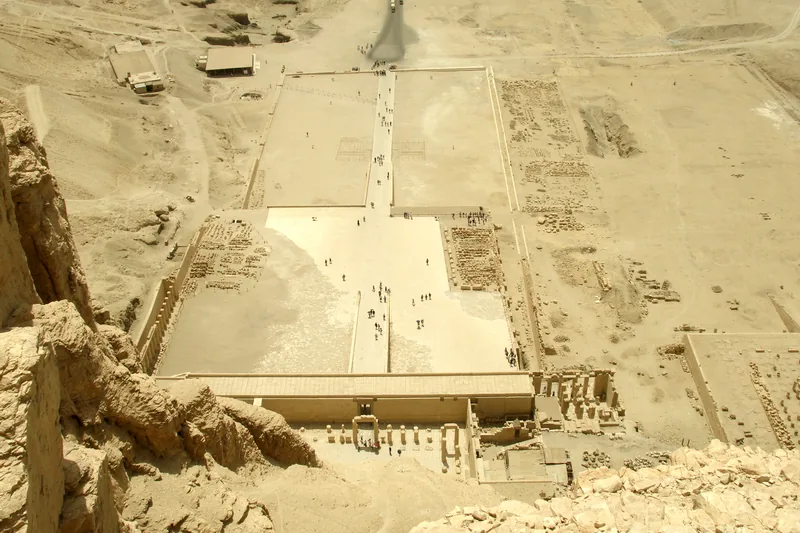
The Temple of Hatshepsut at Deir el-Bahari, on the west bank of the Nile at Luxor (ancient Thebes), photographed by Vyacheslav Argenberg on 21 May 2007. The British Museum school timeline says Hatshepsut ruled about 1473–1458 BC, and that her most famous monument is a funerary temple opposite Thebes (present-day Luxor). The file is CC BY 4.0.Photo: Vyacheslav Argenberg, 21 May 2007 · CC BY 4.0 · Wikimedia Commons
Hatshepsut rules about 1473–1458 BC, “initially because her stepson Thutmose III is too young,” and her most famous monument is “a funerary temple opposite Thebes (present day Luxor).” [source]
2. A king at nine, a tomb in 1922
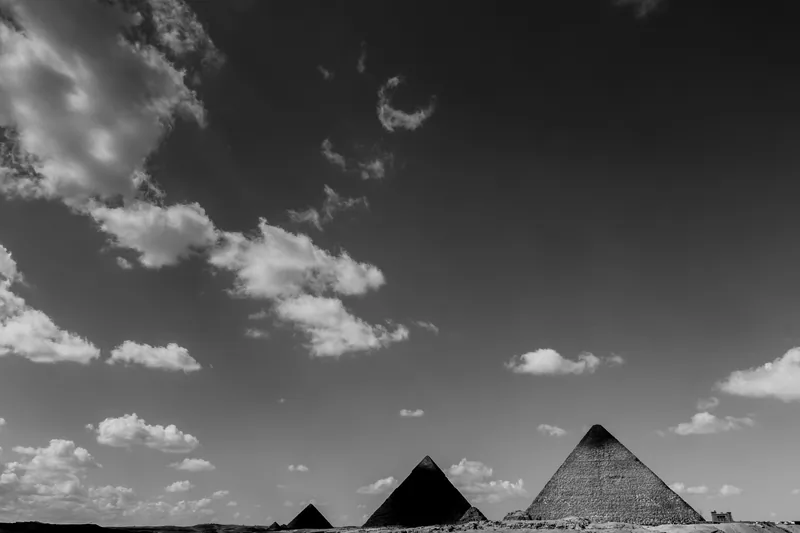
The pyramids of Giza, photographed by Ireneusz Jerzy Borysiewicz on 16 February 2024. The file is CC BY-SA 4.0 and is used on the website only, not in the typographic fact sheets.Photo: Ireneusz Jerzy Borysiewicz, 16 February 2024 · CC BY-SA 4.0 (website only) · Wikimedia Commons
Tutankhamun “becomes king at nine,” about 1336–1327 BC. In 1922 Howard Carter “discovers his nearly intact tomb in the Valley of the Kings.” [source]
3. Sixty-six years, or sixty-seven
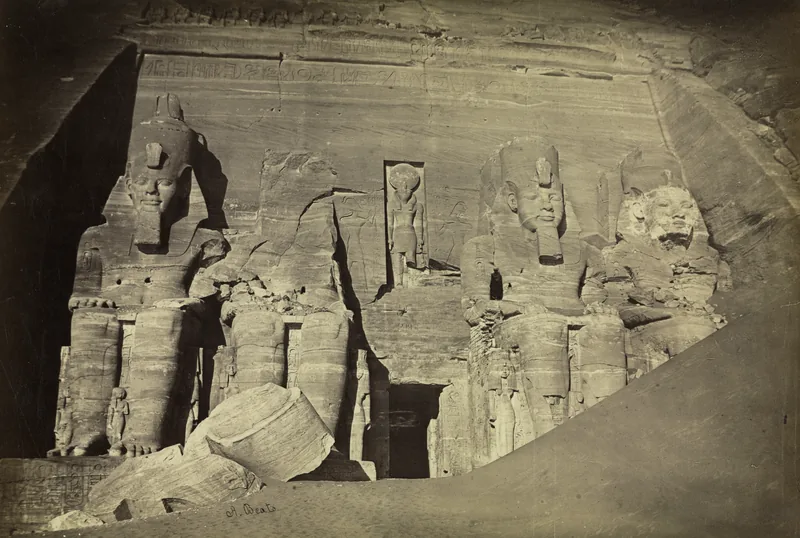
The Temple of Ramesses II at Abu Simbel, photographed by Antonio Beato, about the 1860s. A historical photograph, not a modern colour view. Cleveland Museum of Art. The Commons file carries a museum text that discusses Maxime Du Camp; the photograph itself is catalogued as Antonio Beato, and that is how it is credited here. The file is CC0 1.0.Photo: Antonio Beato, about the 1860s · CC0 1.0 · Wikimedia Commons
The school timeline says Ramses II “rules for 66 years,” about 1279–1213 BC. The teacher pack says “He ruled for 67 years from 1279 BC.” Room 4 says he “reigned through most of the 13th century BC.” [source][source][source]
4. 1,419 signs, and 486 Greek words
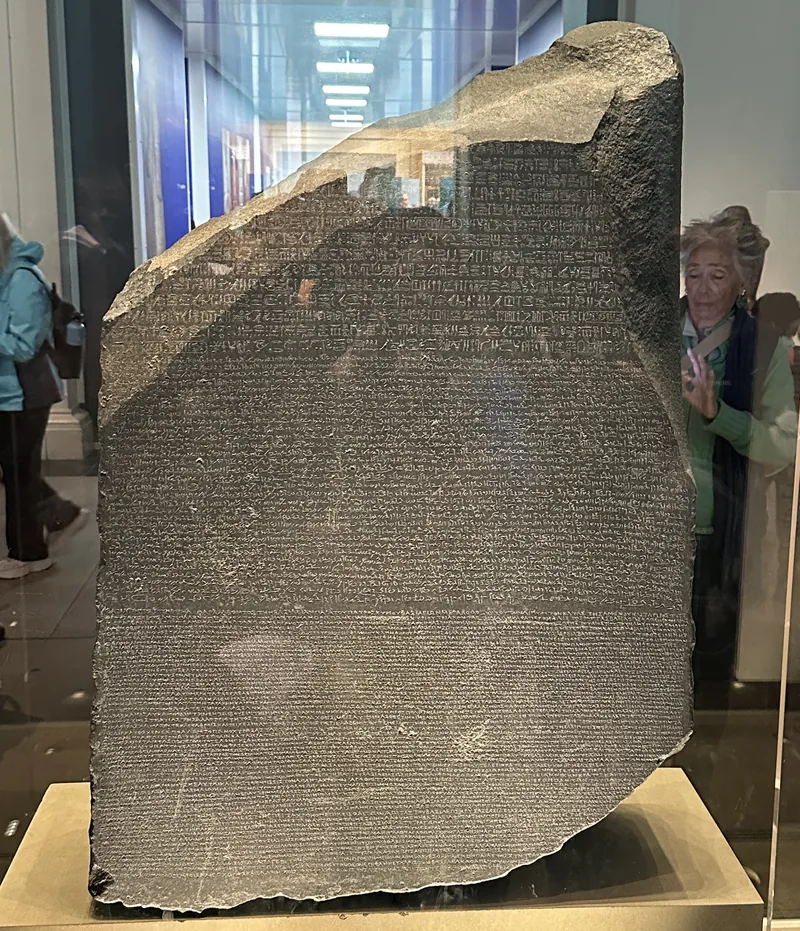
The Rosetta Stone in the British Museum, photographed by APK on 14 May 2026. The British Museum says a decree was inscribed on the stone three times, in hieroglyphic, demotic and Greek. The file is CC BY 4.0.Photo: APK, 14 May 2026 · CC BY 4.0 · Wikimedia Commons
Champollion counted 1,419 hieroglyphic signs on the Rosetta Stone against 486 Greek words, and concluded the system was not purely ideographic. [source]
5. A letter read on 27 September 1822
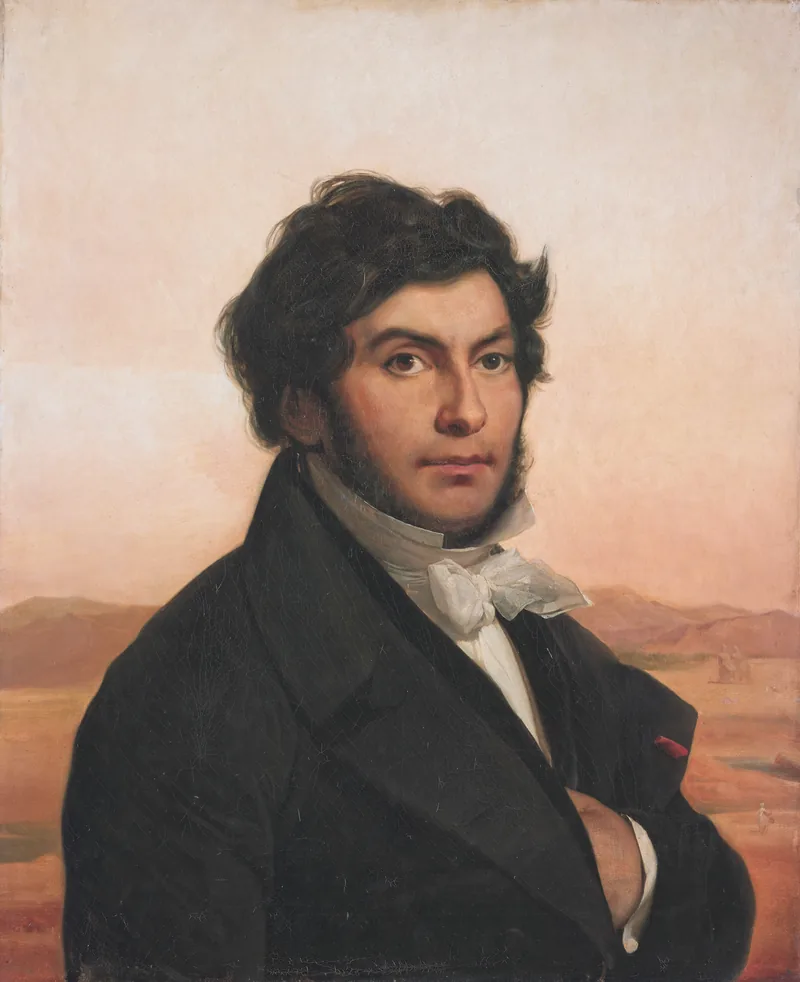
Portrait of Jean-François Champollion, by Léon Cogniet. Ilona Regulski’s British Museum blog records that Champollion’s Lettre à M. Dacier was read on 27 September 1822. The file is in the public domain.Painting: Léon Cogniet · Public domain · Wikimedia Commons
Champollion’s Lettre à M. Dacier was read on 27 September 1822. [source]
6. The last known hieroglyphs
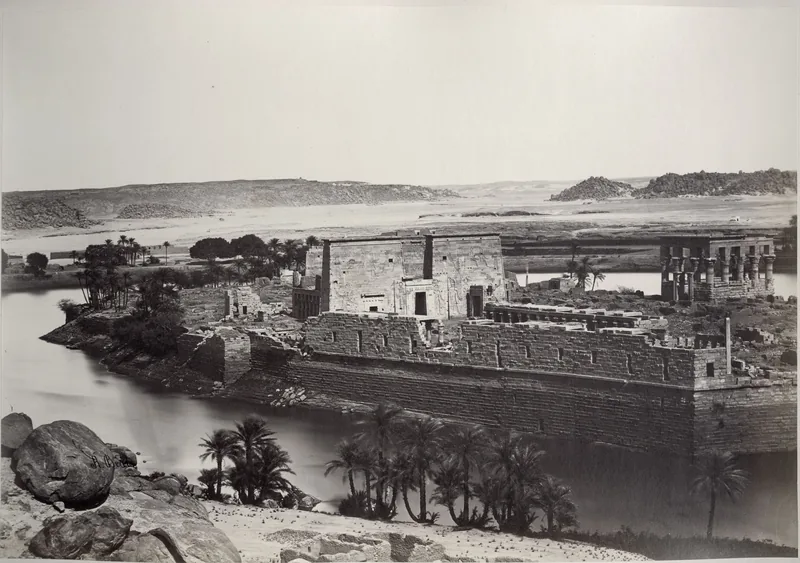
The Temple of Philae, photographed by Antonio Beato, from the Archivio fotografico of the Museo Egizio, Turin. A historical photograph, not a modern colour view. The British Museum school timeline dates the last known hieroglyphic inscription to AD 394, carved on a wall at the Temple of Philae. The file is CC0 1.0.Photo: Antonio Beato · CC0 1.0 · Wikimedia Commons
The last known hieroglyphic inscription is dated to AD 394, carved on a wall at the Temple of Philae. [source][source]
7. Only two or three in a hundred
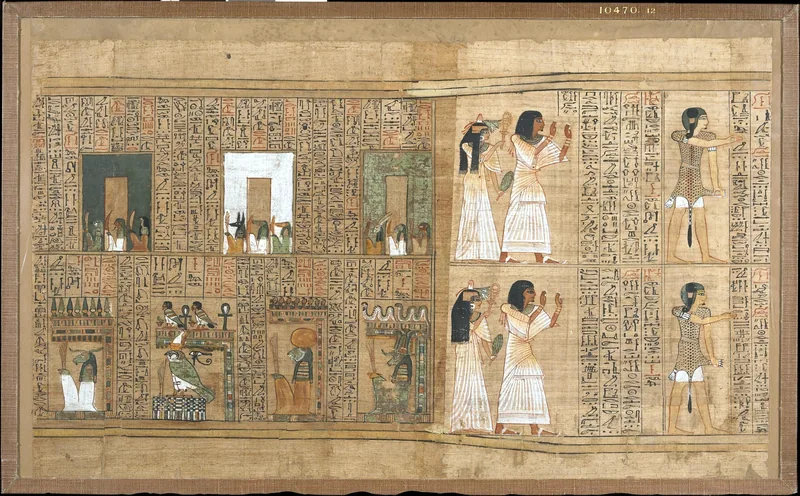
A sheet from the Papyrus of Ani, in the British Museum. The file is in the public domain.Photo: Unknown photographer of a British Museum papyrus · Public domain · Wikimedia Commons
Only about 2–3% of the ancient Egyptian population were literate. The signs grew to over 7,000. [source]
8. A year that fell behind
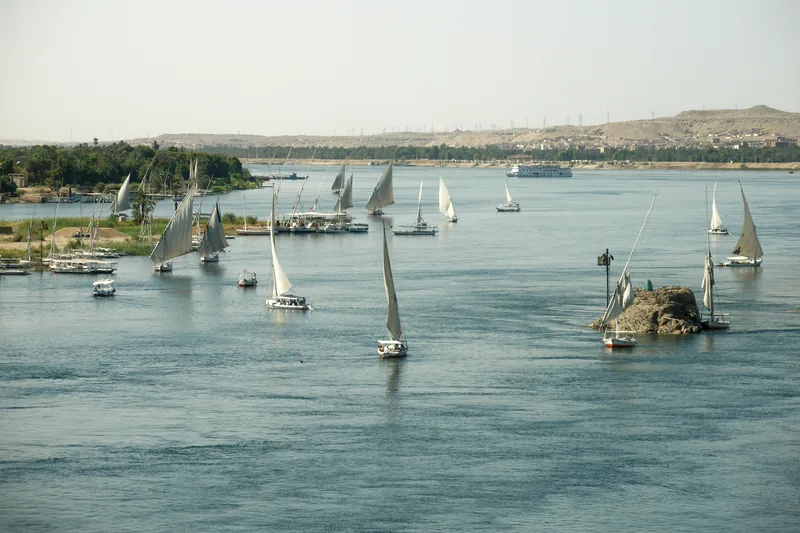
Feluccas on the Nile at Aswan, photographed by Vyacheslav Argenberg on 24 May 2007. The file is CC BY 4.0.Photo: Vyacheslav Argenberg, 24 May 2007 · CC BY 4.0 · Wikimedia Commons
The civil calendar fell back “by a quarter day or so each year,” so its seasons often did not match the agricultural year. [source]
9. A sphinx with a king’s head
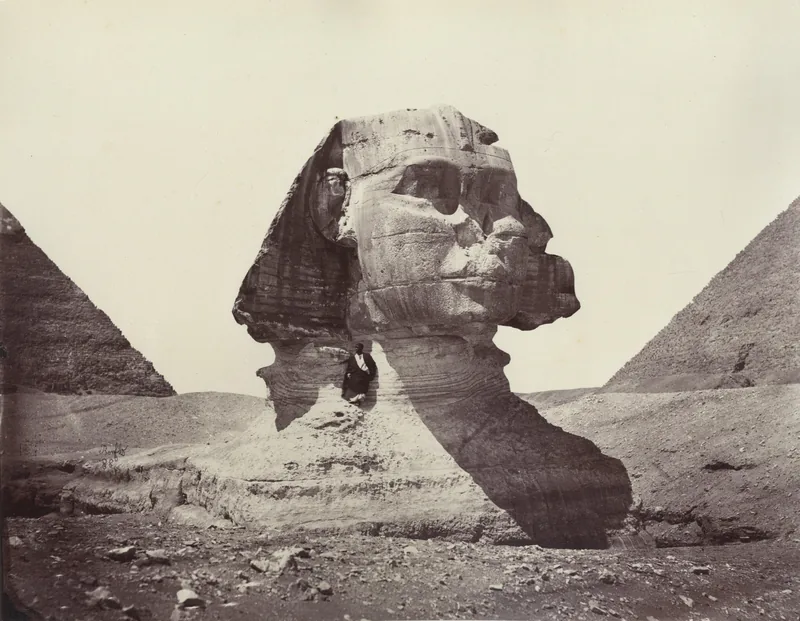
The Great Sphinx of Giza, photographed by Félix Bonfils in 1888. A historical photograph, not a modern colour view. The British Museum school timeline says the pyramid built for the king Khafre is guarded by a huge stone sphinx with the body of a lion and the king’s head. The file is in the public domain.Photo: Félix Bonfils, 1888 · Public domain · Wikimedia Commons
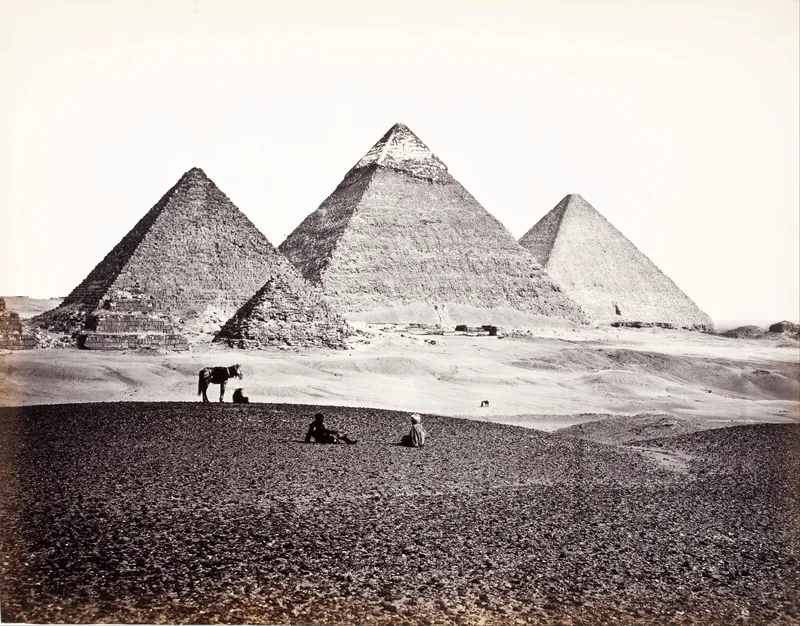
The three large Giza pyramids are dated 2600–2500 BC. “The pyramid built for the king Khafre is guarded by a huge stone sphinx with the body of a lion and the king’s head.” [source]
10. Narmer, about 3100 BC
The pyramids of Giza from the southwest, photographed by Francis Frith. A historical photograph, not a modern colour view. The British Museum school timeline dates the three large stone pyramids at Giza to 2600–2500 BC. The file is in the public domain.Photo: Francis Frith · Public domain · Wikimedia Commons
About 3100 BC, Narmer is “among the first kings to conquer and rule over both Upper and Lower Egypt.” [source]
11. Writing, about 3250 BC
A sheet from the Papyrus of Ani, in the British Museum. The file is in the public domain.Photo: Unknown photographer of a British Museum papyrus · Public domain · Wikimedia Commons
About 3250 BC, writing is invented and hieroglyphic signs develop, in the Predynastic period (about 5500–3100 BC on that page). [source][source]
12. Cleopatra spoke two languages
The Rosetta Stone in the British Museum, photographed by APK on 14 May 2026. The British Museum says a decree was inscribed on the stone three times, in hieroglyphic, demotic and Greek. The file is CC BY 4.0.Photo: APK, 14 May 2026 · CC BY 4.0 · Wikimedia Commons
Cleopatra VII, 51–30 BC, “speaks Greek and Egyptian.” After defeat by Octavian, “Egypt becomes part of the Roman Empire.” [source]
13. A cartouche of all the sun encircled
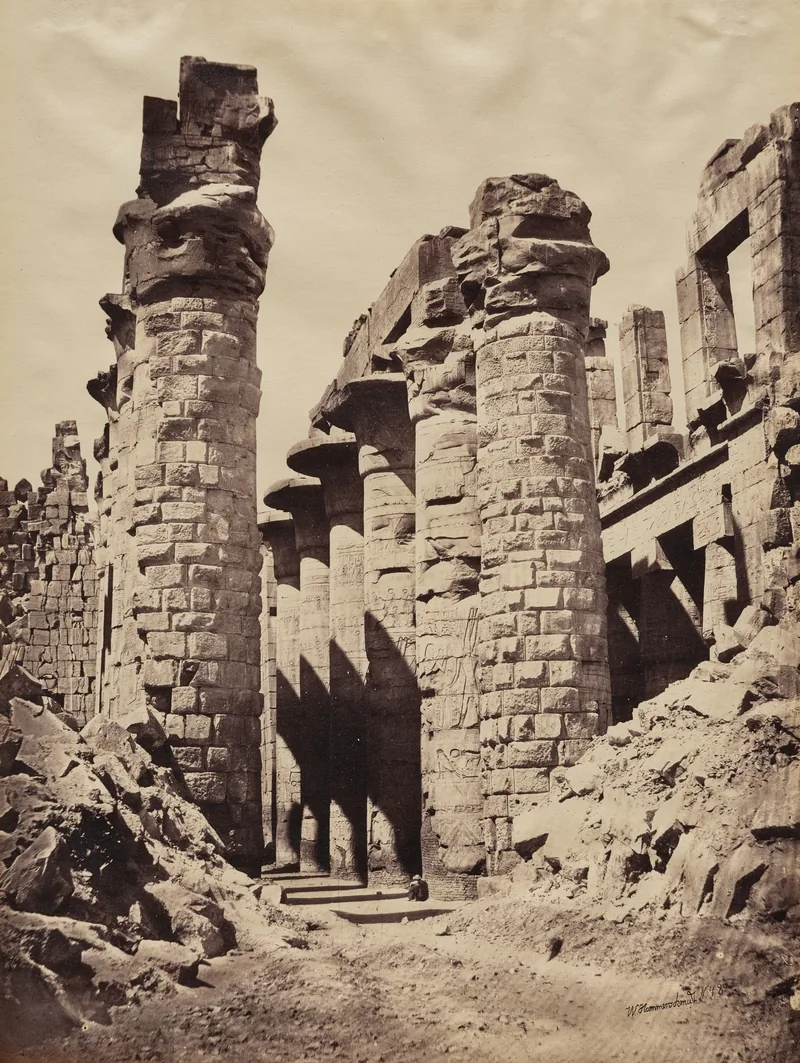
The hypostyle hall at Karnak, photographed by Wilhelm Hammerschmidt in 1869. A historical photograph, not a modern colour view. Cleveland Museum of Art. The file is CC0 1.0.Photo: Wilhelm Hammerschmidt, 1869 · CC0 1.0 · Wikimedia Commons
A cartouche “symbolized the pharaoh as a ruler of all that the sun encircled.” [source]
14. The sign he took as m was ms
Portrait of Jean-François Champollion, by Léon Cogniet. Ilona Regulski’s British Museum blog records that Champollion’s Lettre à M. Dacier was read on 27 September 1822. The file is in the public domain.Painting: Léon Cogniet · Public domain · Wikimedia Commons
In the cartouches of Ramesses and Thutmose, the middle sign Champollion took as m was in fact the two-letter sign ms. [source]
15. Mentuhotep reunites Egypt
The Temple of Hatshepsut at Deir el-Bahari, on the west bank of the Nile at Luxor (ancient Thebes), photographed by Vyacheslav Argenberg on 21 May 2007. The British Museum school timeline says Hatshepsut ruled about 1473–1458 BC, and that her most famous monument is a funerary temple opposite Thebes (present-day Luxor). The file is CC BY 4.0.Photo: Vyacheslav Argenberg, 21 May 2007 · CC BY 4.0 · Wikimedia Commons
Around 2055 BC Mentuhotep II becomes king of Upper Egypt and later takes control of all of Egypt. [source]
16. An age of empire
The Temple of Ramesses II at Abu Simbel, photographed by Antonio Beato, about the 1860s. A historical photograph, not a modern colour view. Cleveland Museum of Art. The Commons file carries a museum text that discusses Maxime Du Camp; the photograph itself is catalogued as Antonio Beato, and that is how it is credited here. The file is CC0 1.0.Photo: Antonio Beato, about the 1860s · CC0 1.0 · Wikimedia Commons
Room 4 calls the New Kingdom “Egypt’s age of empire… extending to the shores of the Euphrates and deep into modern-day Sudan.” [source]
Keep exploring
The fact file — official sentences, gathered in one place.
Hieroglyphs — the long story behind several of these discoveries.
Keep the lights on
Enjoyed this Egypt desk?
No pop-ups. No intrusive advertising. Just interesting stuff. A little support helps the next ages.im site get built.