For families
A king at nine, a stone with three scripts, and a year that drifted
A short way into official ancient Egypt with children, using stories that surprise adults too.
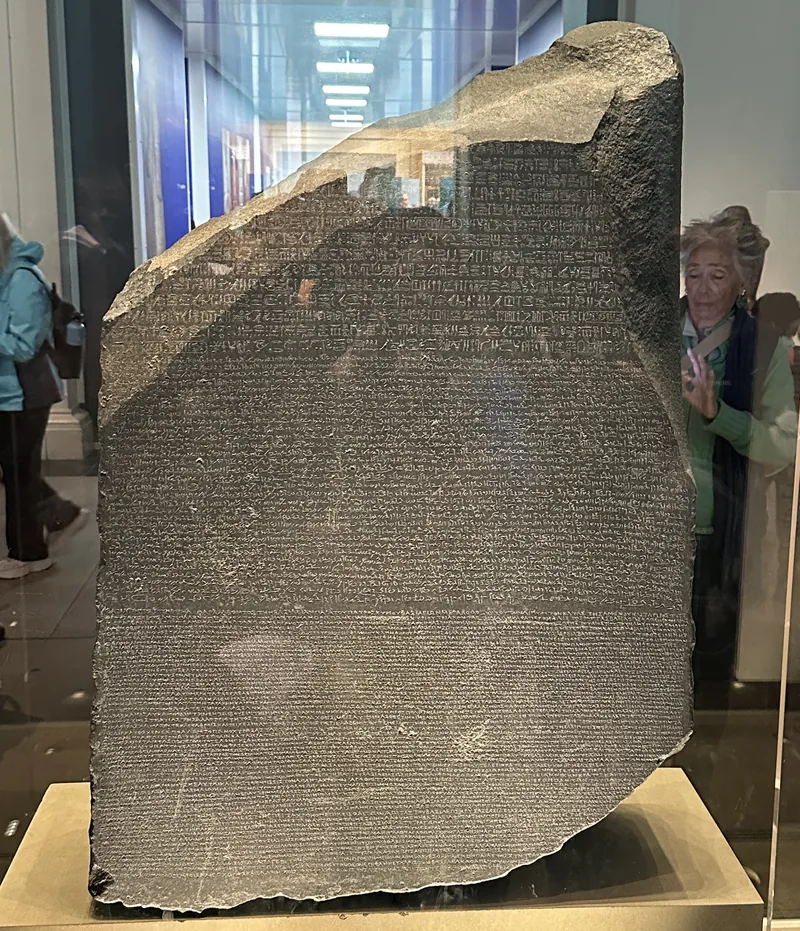
Start with the stone. It carries the same decree three times, in hieroglyphic, demotic and Greek. In 1822 Champollion counted 1,419 signs against 486 Greek words. [source] [source]
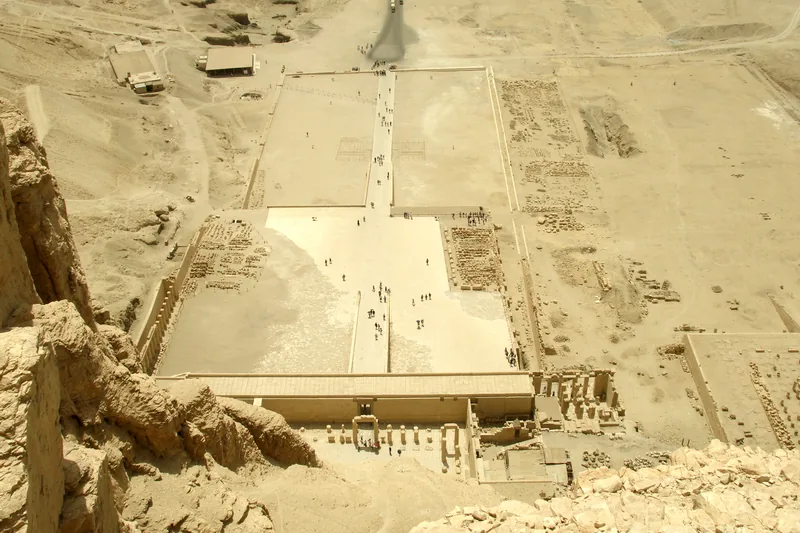
Then Hatshepsut, who ruled because her stepson was too young, and built a funerary temple opposite Thebes. Or Tutankhamun, who became king at nine. [source]
If you like a puzzle, try the quiz or the free fact sheets. They have no photographs, and they print on A4 or Letter.
Keep exploring
- Discoveries — sixteen official stories.
- The Nile year — why the official calendar slowly drifted.
Enjoyed this Egypt desk?
No pop-ups. No intrusive advertising. Just interesting stuff. A little support helps the next ages.im site get built.