Official periods
Which kingdom? Two official tables, kept on their own lines
Room 4 and the school timeline sometimes give different year-ranges for the same period. Both are official. Neither is preferred, and they are not merged.
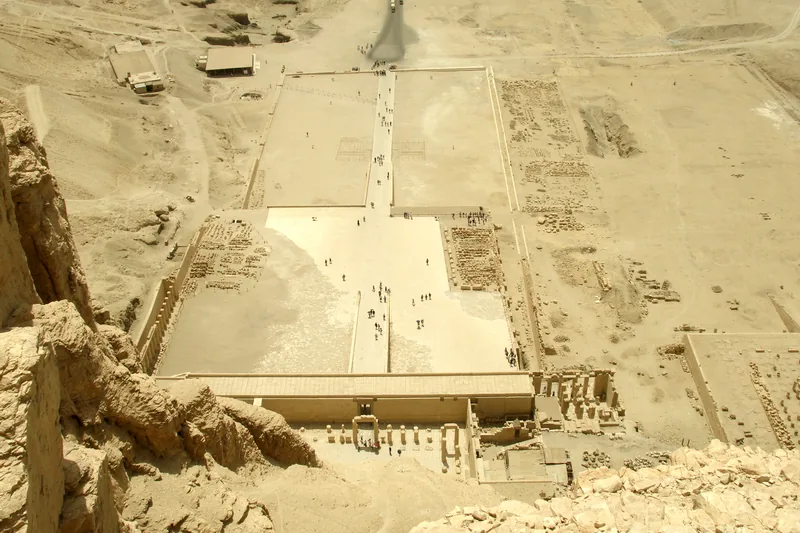
Room 4 says civilisation “arose in the fourth millennium BC and only waned in the first four centuries AD, after Egypt was annexed into the Roman empire,” and calls it “one of the world’s most enduring civilisations.” [source]
Room 4’s period table
Early Dynastic, 1st to 2nd Dynasties, about 3100–2686 BC: “Egypt becomes a unified kingdom with highly centralised administration, built on the invention of hieroglyphic writing.” Old Kingdom, 3rd to 6th Dynasties, about 2686–2181 BC: “the first great period of Egyptian history, when its kings – the pharaohs – are buried in monumental pyramids.” First Intermediate Period, 7th to early 11th Dynasties, about 2181–2025 BC. Middle Kingdom, late 11th to 12th Dynasties, about 2025–1795 BC: “Egypt is reunited under a long succession of powerful kings.” Second Intermediate Period, 13th to 17th Dynasties, about 1795–1550 BC, mentioning Canaanite settlers — the Hyksos. New Kingdom, 18th to 20th Dynasties, about 1550–1069 BC: “Egypt’s age of empire… extending to the shores of the Euphrates and deep into modern-day Sudan.” Third Intermediate Period, 21st to 25th Dynasties, about 1069–664 BC, with invasion by the kingdom of Kush. Late Period, 26th to the final 31st Dynasties, 664–332 BC. Greco-Roman Period, 332 – AD 396. [source]
The school timeline’s different edges
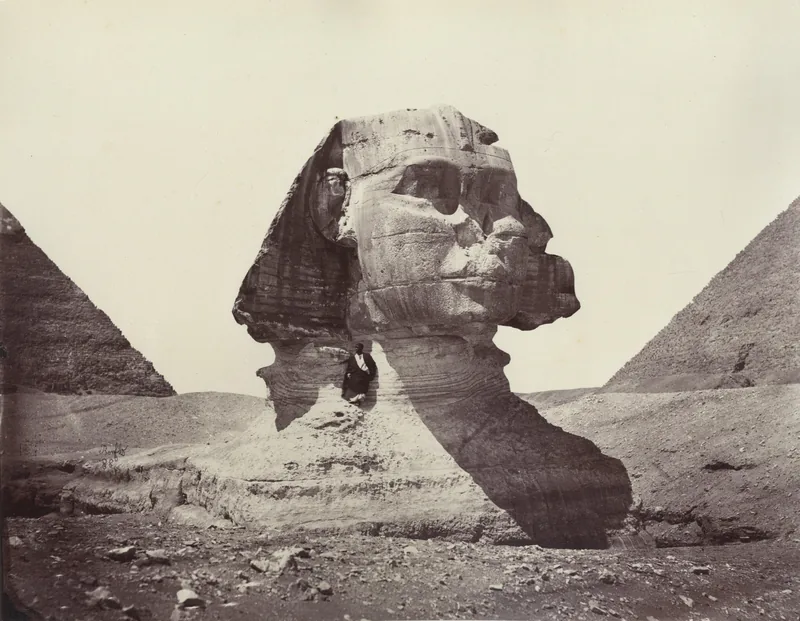
The school timeline, written for ages 9+, gives the First Intermediate Period as about 2181–2055 BC — Room 4 ends that period at 2025 BC — and the Middle Kingdom as about 2055–1795 BC, where Room 4 starts it at 2025 BC. One entry heading also says “About 2055–1650 BC” for a Middle Kingdom tomb-model paragraph, while the period tag on that entry is still “Middle Kingdom (about 2055–1795 BC).” This site does not treat 1650 as the Room 4, or the tagged, Middle Kingdom end. [source]
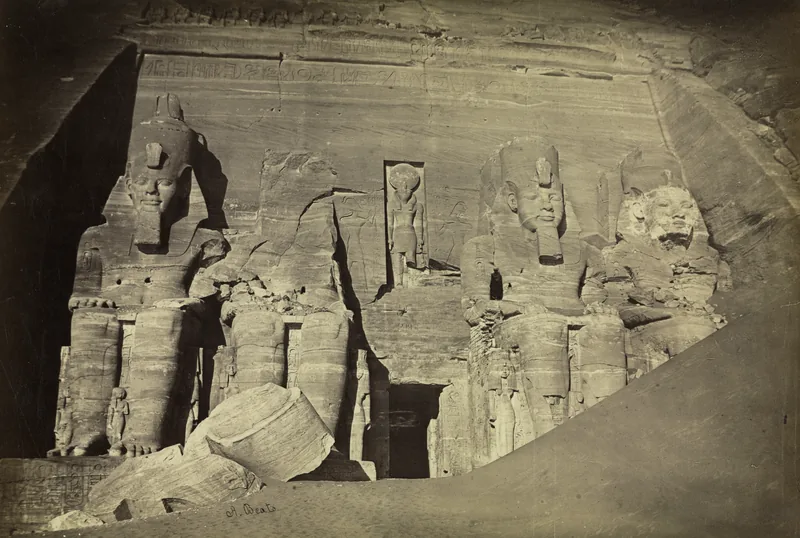
On that school timeline, Mentuhotep II “becomes king of Upper Egypt and later takes control of all of Egypt” around 2055 BC. Hatshepsut rules about 1473–1458 BC, “initially because her stepson Thutmose III is too young,” and “her most famous monument is a funerary temple opposite Thebes (present day Luxor).” Tutankhamun “becomes king at nine,” about 1336–1327 BC, and in 1922 Howard Carter “discovers his nearly intact tomb.” Ramses II “rules for 66 years,” about 1279–1213 BC. Room 4, more loosely, says Ramesses II “reigned through most of the 13th century BC.” The teacher pack says “He ruled for 67 years from 1279 BC.” Those three official wordings stay on their own lines. [source] [source] [source]
Cleopatra VII, 51–30 BC, is “last independent ruler of Egypt” and “speaks Greek and Egyptian.” After “defeat by Octavian (later Augustus), Egypt becomes part of the Roman Empire.” [source]
Keep exploring
- Hieroglyphs — from “god’s words” to a letter in 1822.
- Field notes — 2025 and 2055, 66 and 67, kept apart.
- Discoveries — sixteen official stories.
Enjoyed this Egypt desk?
No pop-ups. No intrusive advertising. Just interesting stuff. A little support helps the next ages.im site get built.