Myths versus facts
Sixty-six years is not quietly rewritten as sixty-seven
Twelve claims, set beside official museum wording.
The claim
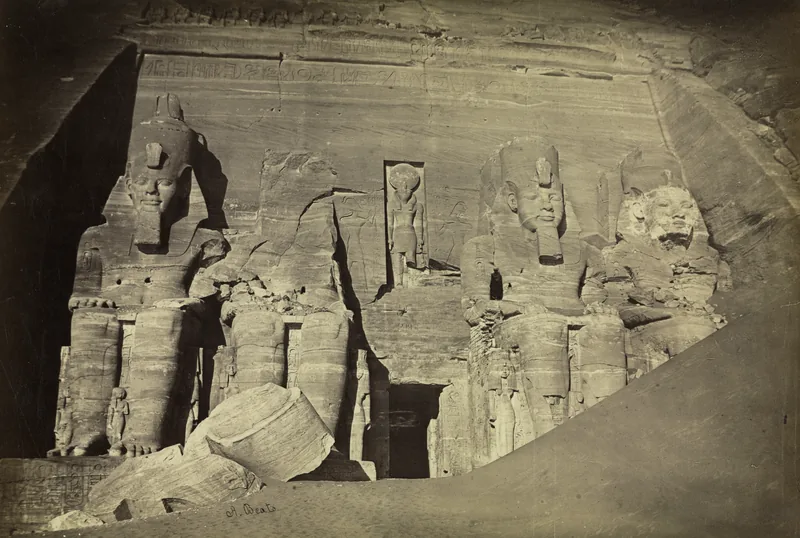
Everyone agrees Ramesses II ruled for one exact number of years.
What the official page says
The school timeline says he “rules for 66 years,” about 1279–1213 BC. The teacher pack says “He ruled for 67 years from 1279 BC.” Room 4 says he “reigned through most of the 13th century BC.” All three official wordings are kept. [source] [source] [source]
The claim
The First Intermediate Period has one official end-date on every British Museum page.
What the official page says
Room 4 ends it at 2025 BC. The school timeline ends it at 2055 BC. [source] [source]
The claim
Hieroglyphs were a simple alphabet, with vowels written out.
What the official page says
The teacher pack says the system was “not an alphabetic system,” and that vowels were not written. [source]
The claim
Most people in ancient Egypt could read the signs on the walls.
What the official page says
Only about 2–3% of the population were literate. [source]
The claim
Champollion thought every sign was a picture of a word.
What the official page says
He counted 1,419 signs against 486 Greek words and concluded the system was a hybrid, not purely ideographic. [source]
The claim
The civil calendar stayed locked to the agricultural year.
What the official page says
The Met essay says it “fell back by a quarter day or so each year,” and often did not match the agricultural seasons. [source]
The claim
Akhet, Peret and Shemu can be given modern month-ranges as if the Egyptians used them.
What the official page says
The official Met wording uses season names, not later Gregorian months. This site does not attach those later ranges. [source]
The claim
The last hieroglyphs were carved at Giza.
What the official page says
The last known inscription is dated to AD 394, at the Temple of Philae. [source]
The claim
Cleopatra spoke only Greek.
What the official page says
The school timeline says she “speaks Greek and Egyptian.” [source]
The claim
Tutankhamun was a long-reigning adult when he became king.
What the official page says
He “becomes king at nine,” about 1336–1327 BC. [source]
The claim
Hatshepsut’s famous temple stands on the east bank, in the modern city of Thebes itself.
What the official page says
The official wording is “a funerary temple opposite Thebes (present day Luxor).” [source]
The claim
The Rosetta Stone carries the same text in two scripts only.
What the official page says
Room 4 says it was inscribed three times, in hieroglyphic, demotic and Greek. [source]
Keep exploring
- The fact file — the official sentences in a straight list.
- Field notes — where two official figures sit side by side.
Enjoyed this Egypt desk?
No pop-ups. No intrusive advertising. Just interesting stuff. A little support helps the next ages.im site get built.