A fact file
90 official facts about ancient Egypt
Each line is taken from an official British Museum or Metropolitan Museum page. The official nuances also live on the field notes.
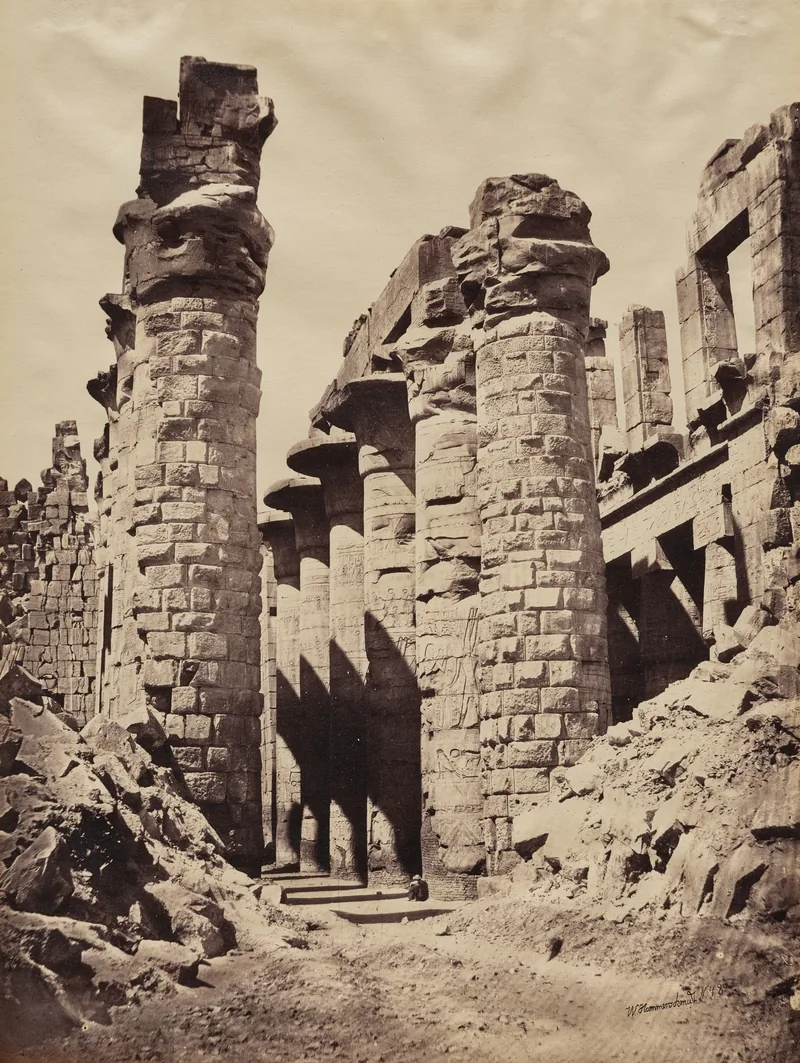
- Egyptian civilisation “arose in the fourth millennium BC.” [source]
- It “only waned in the first four centuries AD, after Egypt was annexed into the Roman empire.” [source]
- Room 4 calls it “one of the world’s most enduring civilisations.” [source]
- Early Dynastic Period, about 3100–2686 BC, 1st to 2nd Dynasties. [source]
- That period is when “Egypt becomes a unified kingdom… built on the invention of hieroglyphic writing.” [source]
- Old Kingdom, about 2686–2181 BC, 3rd to 6th Dynasties. [source]
- It is “the first great period… when its kings – the pharaohs – are buried in monumental pyramids.” [source]
- First Intermediate Period in Room 4: about 2181–2025 BC. [source]
- Middle Kingdom in Room 4: about 2025–1795 BC. [source]
- Then “Egypt is reunited under a long succession of powerful kings.” [source]
- Second Intermediate Period, about 1795–1550 BC, mentioning the Hyksos. [source]
- New Kingdom, about 1550–1069 BC, “Egypt’s age of empire.” [source]
- That empire extended “to the shores of the Euphrates and deep into modern-day Sudan.” [source]
- Third Intermediate Period, about 1069–664 BC, including invasion by Kush. [source]
- Late Period, 664–332 BC. [source]
- Greco-Roman Period in Room 4: 332 – AD 396. [source]
- The Rosetta Stone is a decree inscribed “three times, in hieroglyphic, demotic, and Greek.” [source]
- Room 4 says Ramesses II “reigned through most of the 13th century BC.” [source]
- The school timeline gives the First Intermediate Period as about 2181–2055 BC. [source]
- It gives the Middle Kingdom as about 2055–1795 BC. [source]
- An entry heading also says “About 2055–1650 BC” for a tomb-model paragraph, while the period tag remains 2055–1795 BC. [source]
- About 3250 BC: invention of writing / hieroglyphic signs develop. [source]
- Predynastic is given as about 5500–3100 BC. [source]
- About 3100 BC: Narmer is among the first kings to rule Upper and Lower Egypt. [source]
- 2600–2500 BC: three large stone pyramids at Giza. [source]
- “The pyramid built for the king Khafre is guarded by a huge stone sphinx with the body of a lion and the king’s head.” [source]
- Around 2055 BC Mentuhotep II becomes king of Upper Egypt and later takes control of all of Egypt. [source]
- Hatshepsut rules about 1473–1458 BC. [source]
- She rules “initially because her stepson Thutmose III is too young.” [source]
- “Her most famous monument is a funerary temple opposite Thebes (present day Luxor).” [source]
- Tutankhamun becomes king at nine, about 1336–1327 BC. [source]
- In 1922 Howard Carter discovers his nearly intact tomb in the Valley of the Kings. [source]
- The school timeline says Ramses II “rules for 66 years,” about 1279–1213 BC. [source]
- The Rosetta Stone is dated 196 BC, at el-Rashid, under Ptolemy V. [source]
- That page gives the Ptolemaic period as 332–30 BC. [source]
- Cleopatra VII is dated 51–30 BC, “last independent ruler of Egypt.” [source]
- She “speaks Greek and Egyptian.” [source]
- After defeat by Octavian (later Augustus), “Egypt becomes part of the Roman Empire.” [source]
- The last known hieroglyphic inscription is dated to AD 394, Temple of Philae. [source]
- Egyptians called their writing “god’s words.” [source]
- They believed Thoth, god of wisdom, created writing. [source]
- “Hieroglyphs” comes from a Greek phrase meaning “sacred carvings.” [source]
- Only about 2–3% of the population were literate. [source]
- The script first developed around 3250 BC and was used into the early centuries AD. [source]
- Signs grew to over 7,000, not all used regularly. [source]
- Some signs represent sounds, consonants only; no vowels were written. [source]
- It was “not an alphabetic system.” [source]
- The gaming-board sign for mn is “pronounced men by adding e.” [source]
- A boat outline could follow the sound sign dpt, the word for boat, without being pronounced. [source]
- Hieratic had developed by around 3000 BC. [source]
- By 700 BC demotic replaced hieratic. [source]
- In the Ptolemaic period (332-30 BC) Coptic script emerged. [source]
- The teacher pack also dates the last known inscription to AD 394, Temple of Philae. [source]
- A cartouche “symbolized the pharaoh as a ruler of all that the sun encircled.” [source]
- The ankh is the hieroglyphic word for life, “T-shape with a loop.” [source]
- The teacher pack says Ramses II “ruled for 67 years from 1279 BC.” [source]
- Champollion’s Lettre à M. Dacier was read on 27 September 1822. [source]
- He counted 1,419 hieroglyphic signs against 486 Greek words. [source]
- He concluded the system was a hybrid, not purely ideographic. [source]
- He discovered determinatives. [source]
- A cartouche, on that blog, is “an oval frame around hieroglyphs, indicating the characters represent a royal name.” [source]
- The blog gives the New Kingdom as 1550–1069 BC, matching Room 4. [source]
- It gives the Ptolemaic period as 332–30 BC. [source]
- In the names Ramesses and Thutmose, a sun disc was read as ra. [source]
- The middle sign he took as m was in fact the two-letter sign ms. [source]
- The civil calendar was in use “by at least the middle of the Old Kingdom (ca. 2450 B.C.),” and “quite possibly several centuries earlier.” [source]
- It had twelve months of thirty days each (360 days). [source]
- The three seasons were Inundation (Akhet), Emergence (Peret) and Harvest (Shemu), of four months each. [source]
- Five epagomenal days were added at the end of the year. [source]
- Official dates were written as a day within a month of a season, “e.g., Day 15, Month 3 of the Inundation Season.” [source]
- “A true astronomical year has 365.25+ days.” [source]
- The civil calendar “fell back by a quarter day or so each year.” [source]
- Its seasons “did not correspond to the actual agricultural seasons for much of Egyptian history.” [source]
- Scholars have not agreed when the civil system was first established. [source]
- The Met’s Middle Kingdom range in one paragraph is “ca. 2030–1650 B.C.,” and is not mixed into the British Museum tables. [source]
- Writing is already attached, in Room 4, to the Early Dynastic unified kingdom. [source]
- The school timeline and the teacher pack agree on AD 394 at Philae. [source]
- Room 4’s Greco-Roman span ends at AD 396, two years after that last inscription. [source]
- The Rosetta decree is “suitable for a priestly decree” in hieroglyphic, “the native script used for daily purposes” in demotic, and Greek for “the language of the administration.” [source]
- Old Kingdom pyramids are the burial places of kings, in Room 4’s wording. [source]
- The Hyksos appear in Room 4’s Second Intermediate Period as Canaanite settlers. [source]
- The school timeline’s Hatshepsut dates sit inside its New Kingdom tag of about 1550–1069 BC. [source]
- Carter’s 1922 discovery is of a “nearly intact tomb.” [source]
- Octavian is identified on the school timeline as “later Augustus.” [source]
- This site does not attach Gregorian month-ranges to Akhet, Peret or Shemu. [source]
- This site does not treat a modern Coptic new year as the ancient civil new year. [source]
- Room 4 ends the First Intermediate Period at 2025 BC; the school timeline ends it at 2055 BC. [source]
- Room 4 starts the Middle Kingdom at 2025 BC; the school timeline starts it at 2055 BC. [source]
- The three official wordings for Ramesses II’s reign-length are kept unblended. [source]
- The Papyrus of Ani, shown on this site, is a British Museum papyrus sheet in the public domain. [source]
Keep exploring
- Myths versus facts — 66 years is not quietly rewritten as 67.
- Field notes — 2025 and 2055, kept on their own lines.
Enjoyed this Egypt desk?
No pop-ups. No intrusive advertising. Just interesting stuff. A little support helps the next ages.im site get built.