God’s words
1,419 signs, 486 Greek words, and the last carving at Philae
The Egyptians called their writing “god’s words.” A French letter, read in 1822, showed that those signs were not a purely picture system.
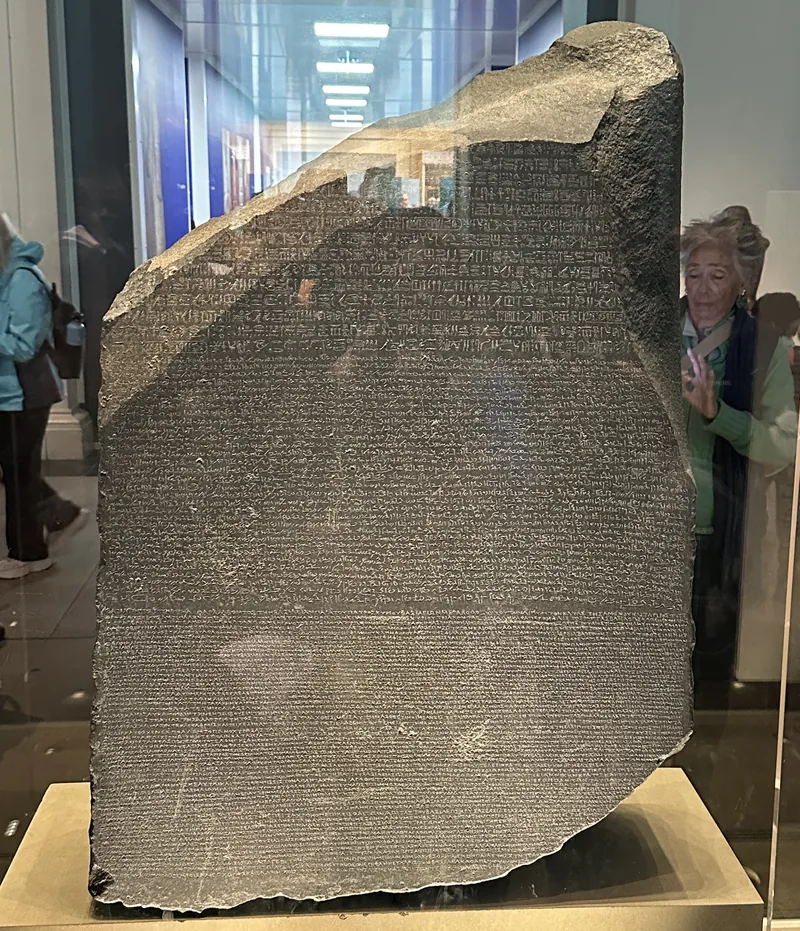
Room 4 describes the Rosetta decree in three scripts: hieroglyphic, demotic and Greek. The school timeline dates the stone to 196 BC, at el-Rashid, as an agreement between Egyptian priests and King Ptolemy V, in the Ptolemaic period (332–30 BC on that page). [source] [source]
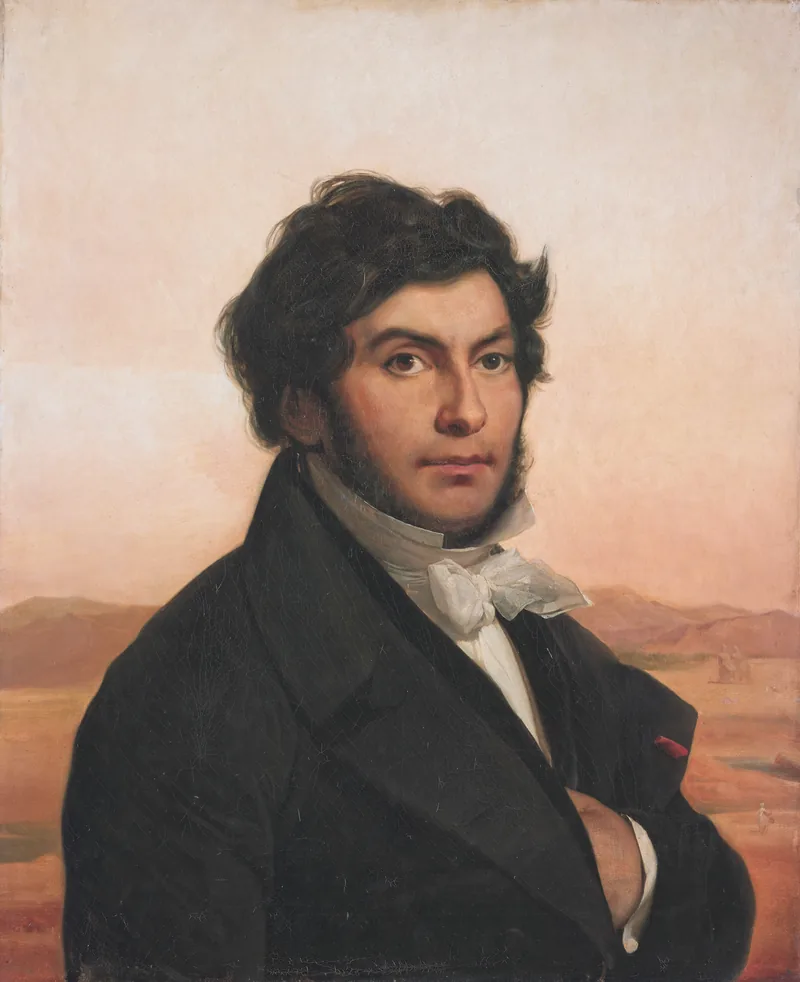
Ilona Regulski’s blog records that Champollion’s Lettre à M. Dacier was read on 27 September 1822. He counted 1,419 hieroglyphic signs against 486 Greek words, and found determinatives — signs that were not pronounced, but helped to clarify meaning. Cartouches were “an oval frame around hieroglyphs, indicating the characters represent a royal name.” In readings of Ramesses and Thutmose he took a sun disc as ra, and mixed phonetic signs and word-signs in the same cartouche. The middle sign he took as m was in fact the two-letter sign ms. [source]
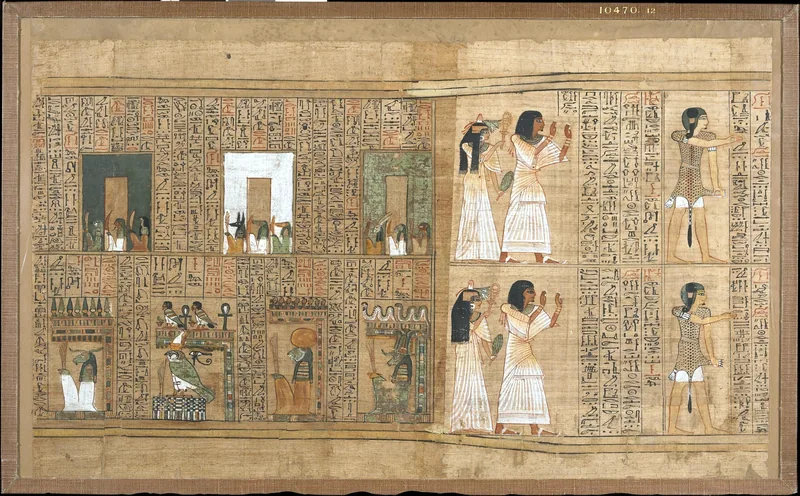
The teacher pack adds the texture of the script itself. Egyptians believed Thoth, god of wisdom, created writing. “Hieroglyphs” comes from a Greek phrase meaning “sacred carvings.” Only about 2–3% of the population were literate. The script first developed around 3250 BC and was used into the early centuries AD; the signs “grew to over 7,000,” not all used regularly. Some signs represent sounds, consonants only; no vowels were written; it was “not an alphabetic system.” One sign can represent two or more consonants, “e.g. the gaming-board hieroglyph for mn, pronounced men by adding e.” Some signs were not pronounced, “such as the outline of a boat following the sound sign dpt which was the word for boat.” Hieratic had developed by around 3000 BC; by 700 BC demotic replaced hieratic. In the Ptolemaic period (332-30 BC) Coptic script emerged. [source]
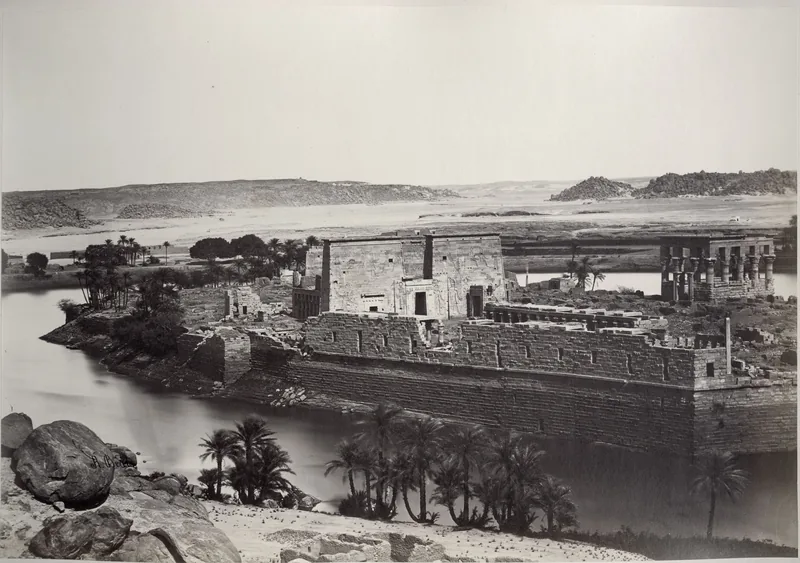
The last known hieroglyphic inscription “dates to AD 394, Temple of Philae.” A cartouche is “an oval shape placed around the name of the king in hieroglyphic inscriptions. It symbolized the pharaoh as a ruler of all that the sun encircled.” The ankh is the hieroglyphic word for life, “T-shape with a loop.” [source] [source]
Keep exploring
- Discoveries — the letter, the tomb, and the last inscription.
- Which kingdom? — the periods in which those signs were used.
- The quiz — twelve questions from the same official pages.
Enjoyed this Egypt desk?
No pop-ups. No intrusive advertising. Just interesting stuff. A little support helps the next ages.im site get built.