A civil year
Twelve months, five extra days, and a year that fell behind
The Metropolitan Museum of Art describes the official civil calendar the Egyptians used to write dates — and why that calendar slowly drifted away from the seasons in the fields.

“By at least the middle of the Old Kingdom (ca. 2450 B.C.), and quite possibly several centuries earlier, the Egyptians had developed a ‘civil’ calendar composed of twelve months of thirty days each (360 days), divided into three seasons — Inundation (Akhet), Emergence (Peret), and Harvest (Shemu) — of four months each, with five epagomenal days (days outside the regular months) added at the end of the year.” Official dates were written “as a specific day within a specific month of a season (e.g., Day 15, Month 3 of the Inundation Season).” [source]
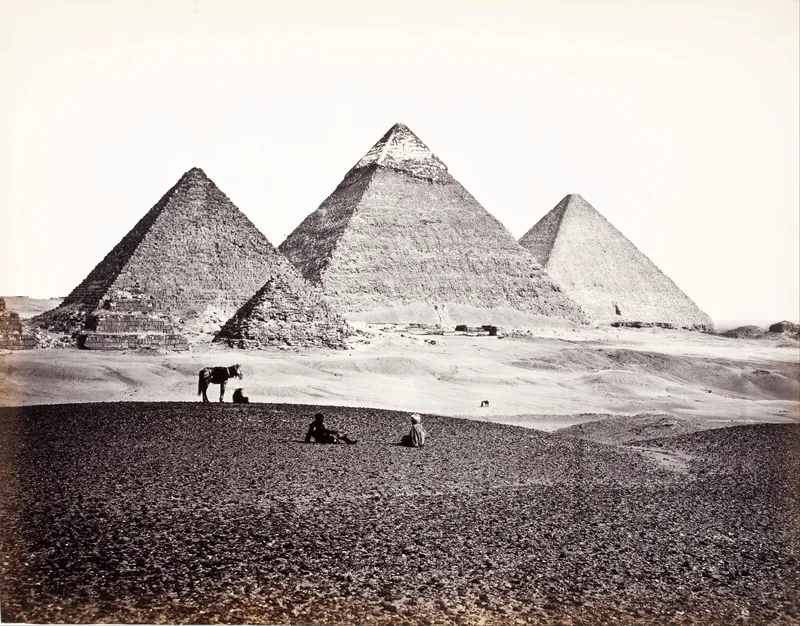
“Since a true astronomical year has 365.25+ days, the Egyptian civil calendar fell back by a quarter day or so each year. This meant that the rising of Sopdet/Sothis and the seasons of this calendar did not correspond to the actual agricultural seasons for much of Egyptian history.” Scholars have tried to use that disconnect to date when the civil system began, “but no agreement on this point has yet been reached.” [source]
This page does not attach later Gregorian month-ranges to Akhet, Peret or Shemu, and it does not treat a modern Coptic new year as the ancient civil new year.

The Met essay also gives a Middle Kingdom range in one paragraph as “ca. 2030–1650 B.C.” That is the Met’s dating, not the British Museum’s, and it is not mixed into the museum tables on the kingdoms page. [source]
Keep exploring
- Which kingdom? — Room 4 and the school timeline, kept apart.
- Field notes — where official year-ranges sit side by side.
- For families — a short way into the year and the signs.
Enjoyed this Egypt desk?
No pop-ups. No intrusive advertising. Just interesting stuff. A little support helps the next ages.im site get built.