Explore ages.im

About 1473–1458 BC

Hatshepsut: a queen, a young stepson, and a temple opposite Thebes

The official school timeline gives her a short, sharp story — and a monument you can still see.
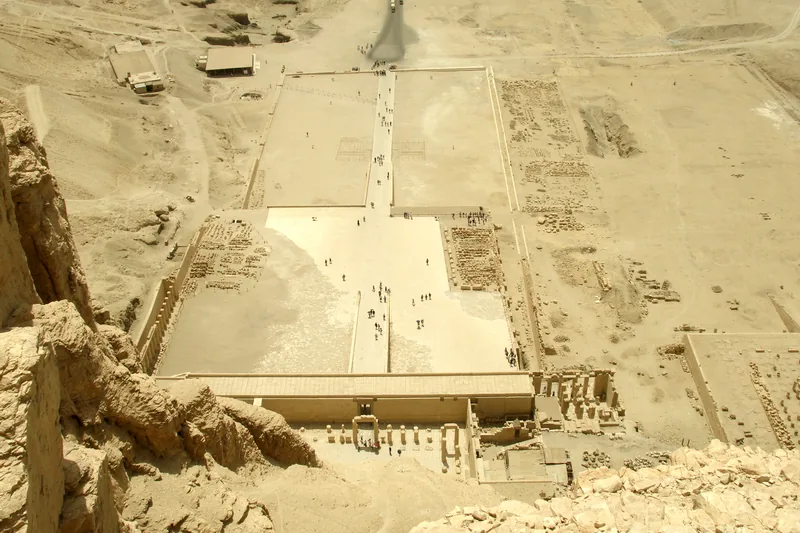
The terraced Temple of Hatshepsut at Deir el-Bahari, set in a bay of limestone cliffs on the west bank of the Nile at Luxor
The Temple of Hatshepsut at Deir el-Bahari, on the west bank of the Nile at Luxor (ancient Thebes), photographed by Vyacheslav Argenberg on 21 May 2007. The British Museum school timeline says Hatshepsut ruled about 1473–1458 BC, and that her most famous monument is a funerary temple opposite Thebes (present-day Luxor). The file is CC BY 4.0. Photo: Vyacheslav Argenberg, 21 May 2007 · CC BY 4.0 · Wikimedia Commons

“About 1473–1458 BC: Hatshepsut rules Egypt, initially because her stepson Thutmose III is too young.” “Her most famous monument is a funerary temple opposite Thebes (present day Luxor).” The period tag is the New Kingdom, about 1550–1069 BC. [source]
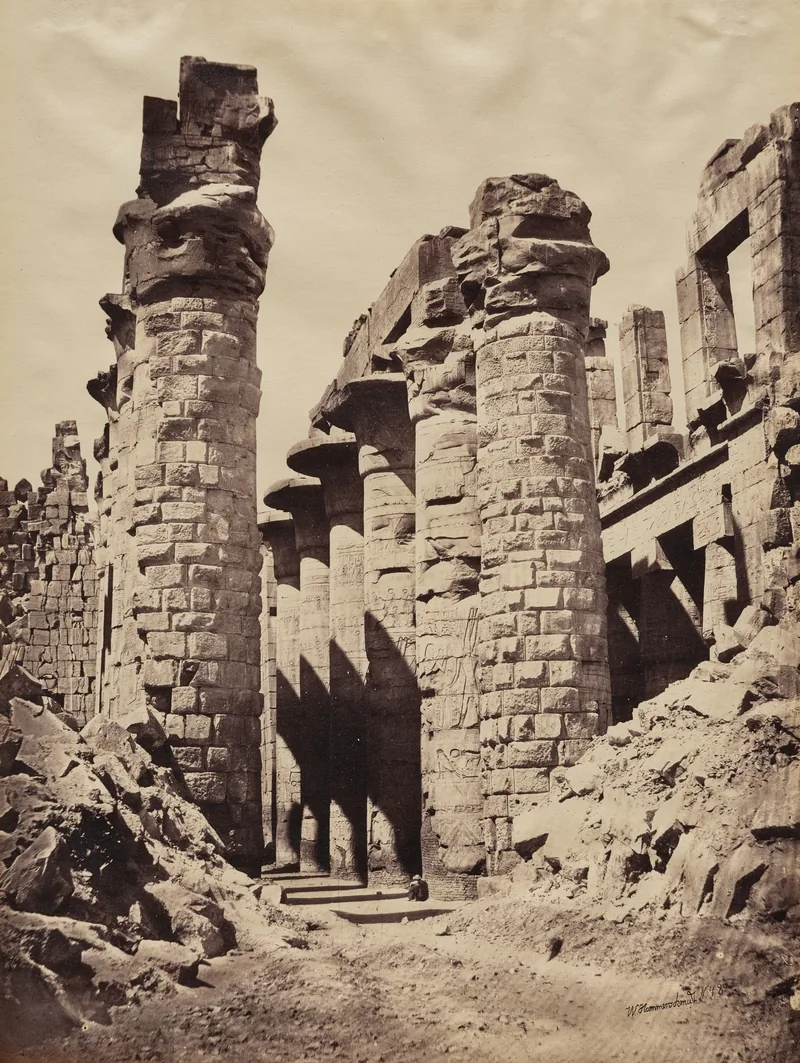
A nineteenth-century photograph of tall columns in the hypostyle hall at Karnak Temple
The hypostyle hall at Karnak, photographed by Wilhelm Hammerschmidt in 1869. A historical photograph, not a modern colour view. Cleveland Museum of Art. The file is CC0 1.0. Photo: Wilhelm Hammerschmidt, 1869 · CC0 1.0 · Wikimedia Commons

The same New Kingdom, Room 4 says, was “Egypt’s age of empire… extending to the shores of the Euphrates and deep into modern-day Sudan.” [source]

Keep exploring

  • Which kingdom? — the New Kingdom in two official tables.
  • Discoveries — Hatshepsut sits among fifteen other official stories.
Keep the lights on

Enjoyed this Egypt desk?

No pop-ups. No intrusive advertising. Just interesting stuff. A little support helps the next ages.im site get built.